
Introduction
South Africa’s logistics sector has become one of the fastest-growing employment drivers, powered by e-commerce expansion, infrastructure development, and rising consumer demand. Behind every online delivery or stocked store is a complex system of warehousing, transport, and supply chain coordination—creating real opportunities for young people seeking stable careers.
The Logistics Learnership 2026 offers a structured entry point into this essential industry. With a monthly stipend of R5600 and practical workplace exposure, the programme is designed to help unemployed youth gain both skills and experience—two of the most critical requirements in today’s job market.
What Is the Logistics Learnership 2026?
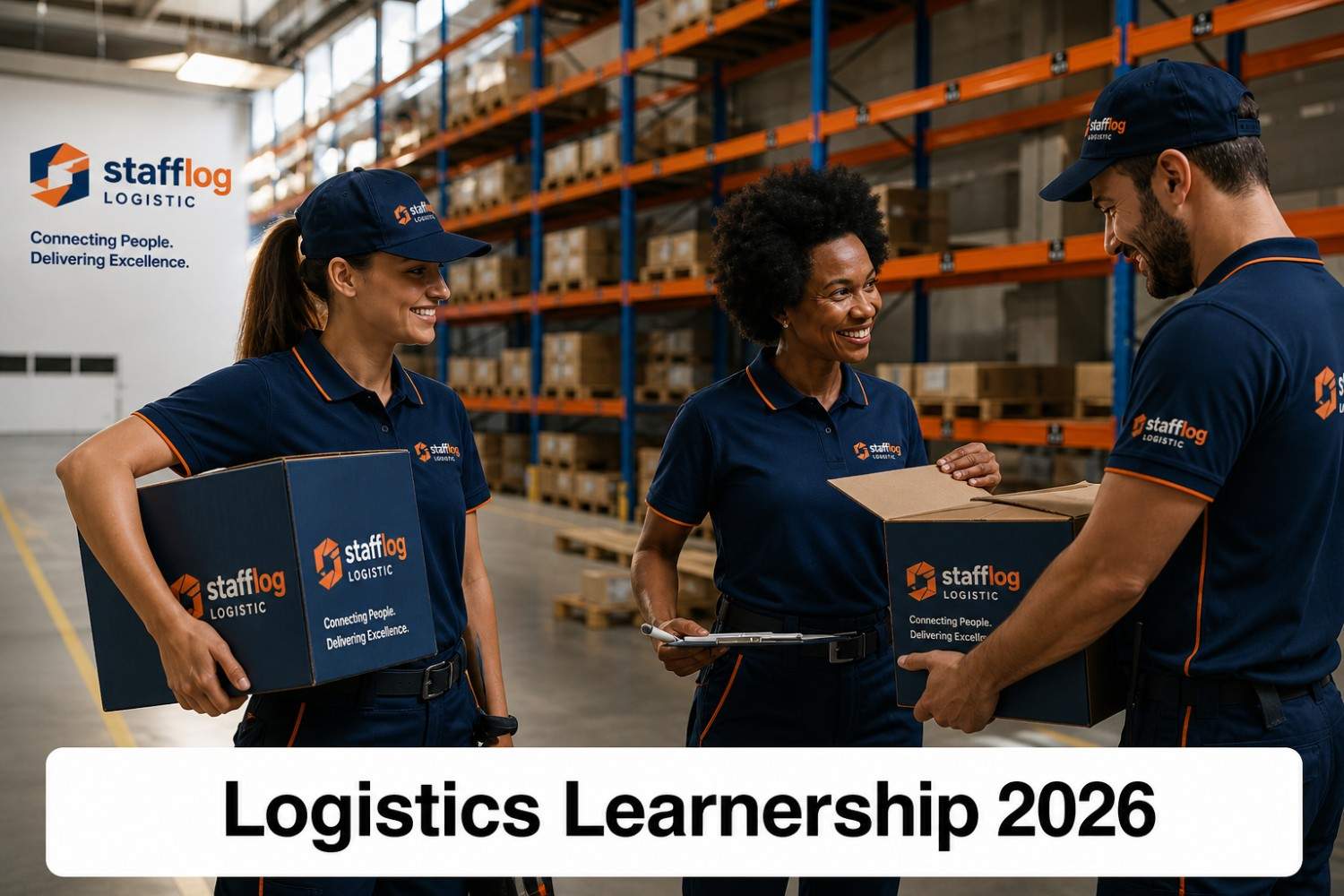
The Logistics Learnership 2026 is a work-integrated training programme offered by Stafflog.
It combines classroom-based learning with real workplace experience in logistics and supply chain operations. Participants receive a monthly stipend while building industry-relevant skills in Gauteng and KwaZulu-Natal—two of South Africa’s busiest logistics hubs.
Background / Purpose
South Africa continues to face a major challenge: many young people struggle to enter the workforce due to a lack of practical experience. At the same time, industries like logistics face a shortage of skilled, work-ready candidates.
This learnership addresses both challenges by:
- Equipping youth with practical, job-ready skills
- Supporting income through a monthly stipend
- Creating a pipeline of talent for logistics employers
- Strengthening sectors linked to trade, retail, and distribution
With major economic activity concentrated in provinces like Gauteng and KwaZulu-Natal, the programme places learners where demand is highest.
How It Works
Participants are enrolled in a structured programme that blends theory with hands-on experience.
- Training typically runs for 12 months
- Learners split time between classroom sessions and workplace training
- Participants receive a monthly stipend of R5600
- Performance is assessed throughout the programme
- Top-performing candidates may be considered for permanent roles
This approach ensures learners do not just study logistics—they actively practice it in real environments.
Key Features / Programme Areas
Core areas of training include:
- Inventory and stock control
- Warehouse operations and systems
- Transport and route planning
- Supply chain coordination
- Workplace safety and compliance
- Basic business and communication skills
Programme benefits:
- Monthly stipend (R5600)
- Practical workplace exposure
- Industry-relevant certification (where applicable)
- Improved employability and CV strength
- Potential pathway to full-time employment
Table: Summary of Important Information
| Category | Details |
|---|---|
| Programme Name | Logistics Learnership 2026 |
| Provider | Stafflog |
| Location | Gauteng & KwaZulu-Natal |
| Duration | ±12 months |
| Stipend | R5600 per month |
| Minimum Qualification | Grade 11 |
| Age Requirement | 18 years and above |
| Programme Type | Work-integrated learning |
| Application Deadline | July 2026 |
| Application Method | Email submission |
Who Can Apply? (Eligibility Criteria)
Applicants must meet the following requirements:
- Be a South African citizen
- Be 18 years or older
- Have completed at least Grade 11
- Reside in Gauteng or KwaZulu-Natal
- Be unemployed at the time of application
- Be willing to commit to a full 12-month programme
Advantageous (but not required):
- Grade 12 certificate
- Basic Maths and English proficiency
- Interest in logistics or supply chain careers
How to Apply
To apply for the learnership:
- Prepare the following documents:
- Certified copy of ID
- Academic results (Grade 11 or higher)
- Updated CV
- Proof of residence
- Send your application via email to:
[email protected] - Use a clear subject line:
“Logistics 2026 Learnership Application – [Your Name]” - Ensure all documents are attached and clearly labeled
Important Things to Know / Practical Tips
- Apply early: Avoid last-minute submissions before the July 2026 deadline
- Tailor your CV: Highlight organisation, reliability, and any practical experience
- Be location-aware: Choose opportunities within reachable distance
- Prepare for assessments: Basic maths, logic, and communication skills may be tested
- Research the industry: Understanding logistics trends can strengthen your interview performance
Expert Tip:
Even informal experience—like helping with stock, deliveries, or small business operations—can strengthen your application. Frame it clearly in your CV.
What Will You Gain?
This learnership provides more than short-term income. Participants develop:
- Real workplace experience in logistics
- Understanding of supply chain systems
- Confidence in professional environments
- Transferable skills applicable across industries
- A stronger, experience-backed CV
In a competitive job market, this kind of exposure can significantly improve your chances of securing long-term employment.
Conclusion
The Logistics Learnership 2026 stands out as a practical, accessible pathway into one of South Africa’s most essential industries. With a monthly stipend, structured training, and placements in key economic regions, the programme offers real value for young people ready to build a career.
For those serious about entering the workforce and gaining meaningful experience, this opportunity provides both a starting point and a stepping stone toward long-term success.
Frequently Asked Questions (FAQ)
1. Is the R5600 stipend guaranteed?
Yes, selected participants receive a monthly stipend of R5600 for the duration of the programme, subject to attendance and participation.
2. Do I need Grade 12 to apply?
No. A minimum of Grade 11 is required, although Grade 12 may improve your chances.
3. Will I get a permanent job after the learnership?
Permanent employment is not guaranteed, but high-performing candidates may be offered positions depending on company needs.
4. Can I apply if I live outside Gauteng or KZN?
No. Applicants must reside in Gauteng or KwaZulu-Natal, as placements are based in these provinces.
5. What skills are most important for success?
Attention to detail, reliability, basic numeracy, communication skills, and a willingness to learn are essential in logistics roles.
