
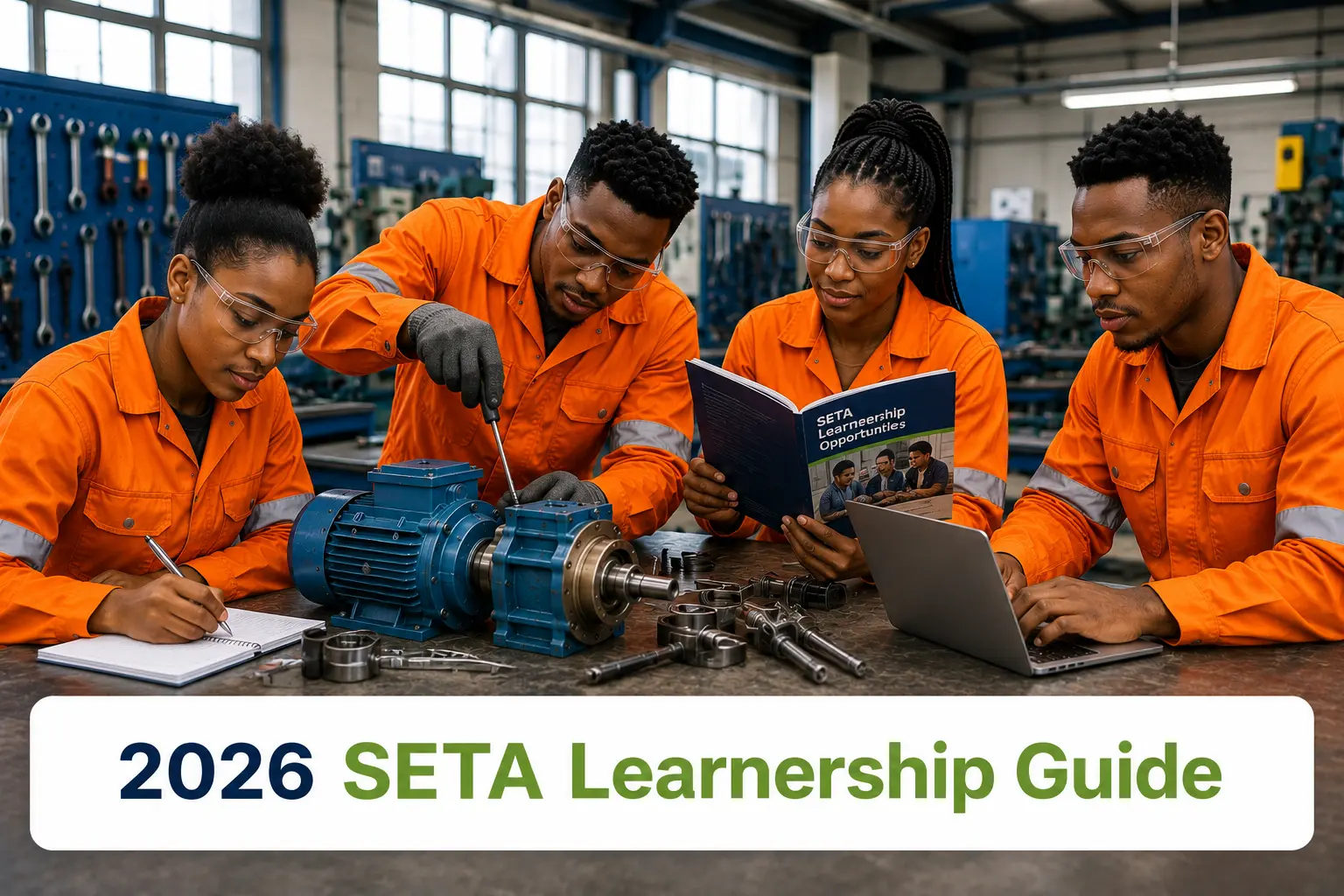
Everything You Need to Know About Paid Learnerships, Monthly Stipends and Accredited Skills Programmes
For many South Africans, finding a first job can be difficult without workplace experience. At the same time, employers often struggle to recruit candidates with the practical skills needed in today’s economy. SETA-accredited learnerships were created to bridge this gap by combining formal education with real workplace training.
Each year, thousands of learnership opportunities become available through accredited employers, public institutions, municipalities, and training providers. These programmes allow participants to work towards nationally recognised qualifications while receiving practical experience and, in most cases, a monthly stipend to assist with transport, meals, and other daily expenses.
As more employers move their recruitment processes online, understanding how to prepare a successful application has become increasingly important. Whether you have completed Grade 9, Grade 12, a TVET qualification or a university qualification, there are learnership opportunities available across multiple industries.
What Is a SETA Learnership?
A SETA (Sector Education and Training Authority) learnership is a structured programme that combines accredited theoretical learning with supervised workplace experience.
Unlike short training courses, learnerships lead to qualifications registered on South Africa’s National Qualifications Framework (NQF), making them nationally recognised by employers and education institutions.
Most programmes are funded through South Africa’s skills development system and are designed to prepare learners for employment in industries experiencing skills shortages.
Key Benefits Include
- Nationally recognised qualifications
- Practical workplace experience
- Professional mentoring
- Monthly learner stipend
- Industry-specific skills development
- Improved employment opportunities
Many employers also use learnerships to identify future employees, although permanent employment is never guaranteed.
Learnership Snapshot
| Category | Information |
|---|---|
| Programme Type | SETA-Accredited Learnership |
| Qualification | NQF Registered Qualification |
| Training Method | Workplace and Classroom Learning |
| Duration | Usually 12–24 Months |
| Stipend | Varies by employer and programme |
| Study Mode | Online, Campus or Blended |
| Availability | Nationwide |
Industries Offering Learnerships in 2026
South Africa’s economy requires skilled workers in a wide range of sectors, creating opportunities for learners with different qualifications and career interests.
Information Technology (ICT)
Technology remains one of the country’s fastest-growing industries.
Popular ICT learnerships include:
- Software Development
- Systems Support
- Cloud Computing
- Artificial Intelligence
- Data Analytics
- Cybersecurity
- Technical Support
- Networking
As businesses continue to digitise their operations, demand for technology professionals is expected to remain strong.
Navigate SETA Accredited Programmes Here
Engineering and Technical Trades
Engineering learnerships prepare learners for careers in infrastructure, manufacturing, construction and industrial operations.
Training areas often include:
- Electrical Engineering
- Mechanical Engineering
- Civil Construction
- Welding
- Plumbing
- Millwright
- Fitting and Turning
- Production Technology
These programmes combine classroom instruction with hands-on practical training.
Healthcare and Community Services
Healthcare programmes support the development of workers needed in clinics, hospitals and community health environments.
Opportunities may include:
- Community Health Work
- Healthcare Support
- Caregiving
- Nursing Assistance
- Pharmacy Support
- Health Administration
Many programmes involve supervised practical experience alongside accredited learning.
Finance, Banking and Insurance
South Africa’s financial services industry regularly offers learnerships aimed at school leavers and graduates.
Common training areas include:
- Financial Accounting
- Banking
- Insurance
- Bookkeeping
- Payroll Administration
- Financial Services
- Business Administration
These programmes help participants develop both technical and customer service skills.
Retail, Hospitality and Tourism
Retail and hospitality continue to provide entry-level employment opportunities across the country.
Typical learnership fields include:
- Retail Operations
- Hospitality Services
- Customer Service
- Tourism
- Wholesale and Distribution
- Food Preparation
Practical workplace exposure is a key component of these programmes.
Documents You’ll Need Before Applying
Preparing your documents in advance can save valuable time when applications open.
Most accredited providers request:
- Certified South African ID copy
- Updated Curriculum Vitae (CV)
- Highest educational qualification
- Proof of residential address
- Academic transcripts (where applicable)
- Banking confirmation (if requested)
- Medical proof of disability (for disability-specific opportunities)
Always read each advertisement carefully, as requirements may vary between organisations.
How Online Applications Usually Work
Although recruitment processes differ, most online learnership applications follow a similar process.
Step 1
Read the full advertisement and confirm that you meet the eligibility requirements.
Step 2
Prepare clear digital copies of all required documents.
Step 3
Complete the online application form using accurate personal and educational information.
Step 4
Upload supporting documents in the required format.
Step 5
Submit your application before the closing date and keep any confirmation email or reference number.
Submitting early can help avoid technical problems close to the deadline.
Do You Always Need to Complete Assessments?
No.
Selection methods differ between employers.
Some organisations shortlist candidates based only on:
- Qualifications
- Supporting documents
- Employment Equity requirements
Others may include:
- Online assessments
- Aptitude tests
- Literacy and numeracy evaluations
- Interviews
- Medical examinations
- Background checks
Always follow the instructions provided in the official advertisement.
Understanding Learnership Stipends
Most funded learnerships provide a monthly stipend to assist learners while they complete training.
Stipends are intended to help cover:
- Transport
- Meals
- Communication costs
- Learning materials
- Basic living expenses
The amount differs depending on:
- Employer
- Industry
- SETA funding
- Qualification level
- Programme duration
Applicants should avoid relying on unofficial stipend figures and instead use the amount published in the official vacancy.
Five Mistakes That Can Cost You an Opportunity
Recruitment teams frequently reject applications because of avoidable errors.
Common mistakes include:
- Missing supporting documents
- Expired certified copies
- Incorrect phone numbers
- Incomplete application forms
- Applying after the deadline
Reviewing your application carefully before submission can reduce the risk of disqualification.
Why Employers Continue Investing in Learnerships
Learnerships help organisations develop future talent while supporting South Africa’s broader skills development strategy.
For learners, the benefits extend beyond the qualification itself.
Participants gain:
- Practical experience
- Professional references
- Workplace confidence
- Industry exposure
- Improved employability
- Opportunities for further study
Many former learners later progress into internships, apprenticeships or permanent employment.
Career Opportunities After a Learnership
Depending on the qualification completed, graduates may pursue careers in:
- Information Technology
- Healthcare
- Engineering
- Logistics
- Manufacturing
- Banking
- Insurance
- Retail
- Hospitality
- Public Administration
- Customer Service
- Business Management
Many also continue towards higher NQF qualifications after completing their learnership.
Final Thoughts
SETA-accredited learnerships continue to provide one of the most practical pathways into employment for South Africans looking to gain recognised qualifications and workplace experience.
By preparing your documents early, following official application instructions and applying through accredited providers, you can improve your chances of joining a programme that supports both personal growth and long-term career development.
With new opportunities opening throughout the year, staying informed through official SETA websites and employer career portals remains one of the best ways to find suitable learnerships.
Frequently Asked Questions
Can I apply with Grade 11?
Yes. Some learnerships accept applicants with Grade 9, Grade 10 or Grade 11, while others require Matric or tertiary qualifications.
Are learnership applications free?
Legitimate SETA-accredited learnerships do not charge application fees.
Is the monthly stipend a salary?
No. A stipend is financial assistance provided during the training period and should not be regarded as permanent employment income.
Can I apply for several learnerships?
Yes, provided you meet the requirements and are not currently participating in another funded learnership.
Sources and References
- Department of Higher Education and Training (DHET)
- South African Qualifications Authority (SAQA)
- National Skills Development Plan 2030
- Skills Development Act, 1998
- Sector Education and Training Authorities (SETAs)
Editorial Standards
This guide is independently researched and written using publicly available information from South Africa’s skills development framework. While every effort has been made to ensure accuracy, application requirements, qualification criteria, stipend amounts and closing dates may differ between employers and accredited training providers. Readers are encouraged to verify all information using official SETA, employer or government sources before submitting an application.
Published: June 2026
Category: Learnerships | Career Advice | Skills Development | TVET | Education | South Africa
