
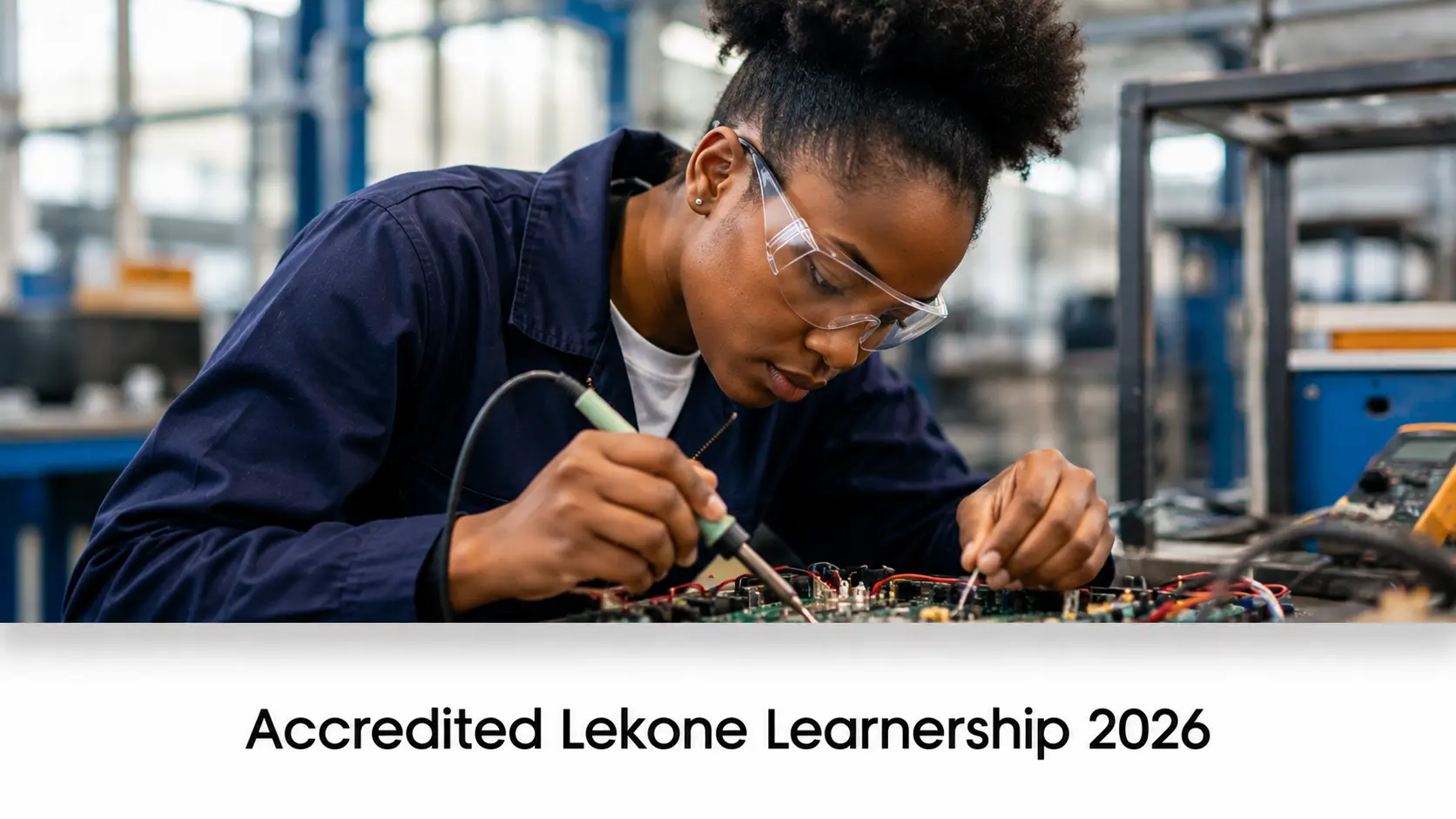
Paid Technical Skills Programme Offers Grade 11 Youth a Route Into Engineering, Manufacturing and Industrial Careers
As South Africa continues working to reduce youth unemployment through workplace-based training, a new opportunity is giving unemployed young people the chance to gain practical experience while earning a monthly income. Applications are now open for the SETACO-Accredited Lekone Learnership 2026, a 12-month programme that combines accredited learning with hands-on workplace training.
Successful applicants will receive a monthly stipend of R4,900, allowing them to develop technical and workplace skills while receiving financial support throughout the programme.
Open to South Africans aged 18 years and older with a minimum of Grade 11, the learnership is designed to prepare participants for careers in engineering support, manufacturing, production and other technical industries where practical experience is highly valued.
Applicants have until 22 July 2026 to submit their applications.
Programme Overview
| Programme Information | Details |
|---|---|
| Programme | SETACO-Accredited Lekone Learnership 2026 |
| Training Location | Various Sites Across South Africa |
| Programme Duration | Approximately 12 Months |
| Monthly Stipend | R4,900 |
| Minimum Qualification | Grade 11 |
| Minimum Age | 18 Years |
| Employment Requirement | Unemployed |
| Application Method | |
| Closing Date | 22 July 2026 |
| Email Address | [email protected] |
Building Practical Skills for South Africa’s Industrial Economy
South Africa’s engineering and manufacturing sectors continue to require workers with practical technical knowledge and workplace experience. Learnerships have become an important way of preparing young people for these industries by combining structured education with real-world training.
The SETACO-accredited Lekone Learnership follows this model by exposing participants to practical work environments while supporting their development through formal learning.
This combination enables learners to understand how industrial workplaces operate while strengthening the professional skills employers increasingly expect from entry-level candidates.
Why Accredited Training Makes a Difference
Choosing an accredited learnership provides benefits beyond the training itself.
Because the programme aligns with recognised skills development standards, participants gain qualifications that are designed to support long-term employability and future learning opportunities.
Accredited workplace training can also strengthen a learner’s professional profile when applying for employment within technical industries.
Areas of Learning
Participants are expected to receive training across both technical and workplace competencies.
Learning areas may include:
Technical Skills
- Manufacturing operations
- Basic engineering practices
- Production support
- Equipment handling
- Quality assurance
- Workplace safety procedures
Professional Development
- Communication skills
- Team collaboration
- Problem-solving
- Time management
- Professional conduct
- Workplace responsibility
These competencies remain valuable across manufacturing, engineering, logistics and industrial operations.
Financial Support During the Programme
Learners accepted into the programme will receive a monthly stipend of R4,900.
The financial assistance is intended to help participants meet expenses such as:
- Daily transport
- Meals
- Study materials
- Communication costs
- Personal living expenses
Providing financial support allows learners to concentrate on developing their skills throughout the programme.
Eligibility Requirements
Applicants should satisfy the following minimum requirements:
- South African citizen or permanent resident.
- 18 years of age or older.
- Grade 11 qualification or higher.
- Currently unemployed.
- Available for full-time participation.
Applicants with computer literacy, technical interests or previous vocational studies may strengthen their applications.
Documents Required
Applicants should prepare:
- Updated Curriculum Vitae.
- Certified South African Identity Document.
- Certified Grade 11 or higher qualification.
- Additional certificates where available.
Ensure all supporting documents are clearly scanned and submitted in PDF format.
Career Opportunities After Completion
The programme helps prepare participants for entry-level opportunities across several sectors.
Potential career pathways include:
- Engineering Support Assistant
- Production Operator
- Manufacturing Assistant
- Quality Control Assistant
- Plant Operations Assistant
- Technical Services Assistant
- Warehouse Operations Support
- Maintenance Assistant
Graduates may also continue into apprenticeships, occupational qualifications or advanced technical learnerships.
Application Process
Interested applicants should complete the following steps before the deadline.
Prepare Required Documents
Gather and certify all supporting documentation.
Write a Short Motivation
Explain why you are interested in the programme and how it supports your career goals.
Submit Your Application
Applications should be emailed to:
Suggested Subject Line
2026 Learnership Application – Your Full Name
Applications close on 22 July 2026.
Why This Programme Matters
South Africa’s economy increasingly depends on workers with practical technical skills who can contribute effectively from the beginning of their careers.
Programmes such as the SETACO-Accredited Lekone Learnership help bridge the gap between education and employment by combining recognised training with valuable workplace exposure.
For unemployed youth seeking a long-term career rather than temporary work, this opportunity provides a foundation for professional growth while developing skills that remain relevant across multiple industries.
Sources and References
- SETACO-Accredited Lekone Learnership 2026 programme information.
- Department of Higher Education and Training (DHET).
- National Skills Development Plan 2030.
- Skills Development Act, 1998 (Act No. 97 of 1998).
Editorial Transparency
Published: 26 June 2026
Editorial Policy: This article has been independently written using programme information provided by the organiser together with publicly available information on South Africa’s skills development system. Additional labour market analysis has been included to provide readers with broader context on technical training opportunities. Prospective applicants are encouraged to verify all programme information directly with the recruiting organisation before applying.
