
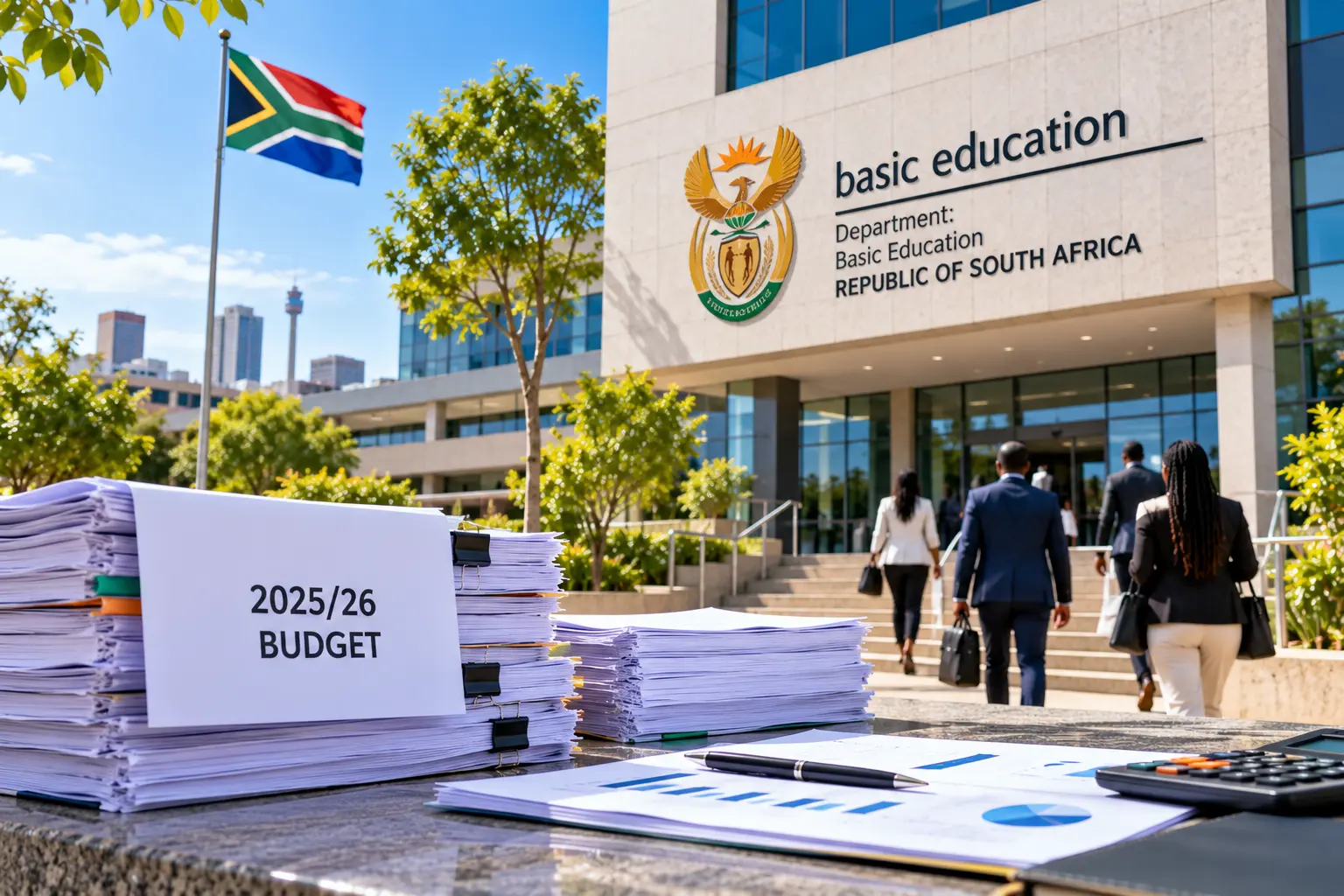
The Department of Basic Education (DBE) has returned R743 million to the National Revenue Fund after leaving it undistributed during the 2025/26 financial year, including millions of rand earmarked for early childhood development and school infrastructure.
The amount of money left undistributed is significant because a considerable proportion was allocated to programmes and services, including Early Childhood Development (ECD).
How much money did the department of basic education fail to spend?
The Department of Basic Education failed to spend R743 million of its 2025/26 budget for the financial year ended 31 March 2026.
According to reports on the department’s performance, R389.3 million of the amount not spent concerned early childhood development, while R249.4 million related to school infrastructure. The remaining part of the unspent budget came from other expenditures and sources. [Sic]
The money was returned to the National Revenue Fund instead of being spent on education.
Why was the money not spent?
The amount of money left undistributed raised questions about the department’s ability to deliver services and programmes within the allocated budget.
It has been reported that procurement constraints, capacity, and administrative weaknesses contributed to the inability to utilise some of the allocated resources.
This is especially the case with programmes that have a timeline for implementation. If procurement or other aspects of service delivery take longer than expected, there may still be an unspent allocation even if the need for the service persists.
R389.3 million related to early childhood development
One of the largest expenditures associated with the unspent allocation related to early childhood development, where R389.3 million of the total R743 million was allocated. [Sic]
The ECD budget is a significant item for the department, as ECD services aim to provide care and support to children before they enter school.
The report on the DBE’s performance has raised many concerns among civil-society organisations about the accessibility of ECD services, especially considering the needs of disadvantaged communities.
School infrastructure budget of R249.4 million
Another significant item associated with the unspent allocation concerned school infrastructure, where R249.4 million was allocated. [Sic]
School infrastructure is an essential aspect of the education system, as it provides the basic conditions necessary for teaching and learning.
At the same time, a budget item for a specific school infrastructure project cannot be freely used for another project because government spending takes place within the framework of specific programmes and appropriations.
Thus, the reports on the DBE’s performance raised many questions about the ability of the department to utilise its budget efficiently and effectively.
Concerns about the unspent allocation
Many community organisations and stakeholders expressed concerns over the unspent allocation to the Department of Basic Education.
The issue raised by these groups concerns the lack of delivery of education services and the wasted public resources.
While it is true that the amount of R743 million does not directly concern a specific service, the DBE budget report demonstrated that several key areas of education underfunded.
Most importantly, stakeholders questioned the value of the ECD budget, the school infrastructure budget, and the overall delivery capacity of the department in relation to current needs.
What does it mean that the money was returned to the National Revenue Fund?
When a government department fails to spend part of its annual allocation, the money is returned to the National Revenue Fund, which serves as the government’s bank account.
It is important not to conflate the issues of underspending and corruption.
While it is true that a department that has misused public funds can be accused of both, the fact that a department has not spent part of its allocation does not automatically mean that it stole the money.
There may be various reasons why a government department spends less than it budgeted, for example, due to delays in procurement or implementation of projects.
Therefore, the concerns related to the DBE’s performance report concern value for money, including the ability of the department to provide the necessary education services within the allocated budget.
Why does the budget of the department of basic education matter?
The Department of Basic Education is responsible for the education of millions of South Africans, which makes its performance of utmost importance.
When a significant part of the DBE’s budget remains unspent, the most pressing concern is whether the services and programmes that should have been delivered have been delivered.
In addition to this, there is also a question of the capacity of the department, including whether there were enough officials and resources to deliver the services within the given time frame.
These are the questions that should be investigated to understand the situation with the DBE’s budget.
What happens next?
The returned allocation fits into the bigger picture of government spending reports and accountability. The performance of the Department of Basic Education will be subject to scrutiny by oversight authorities, including Parliament.
For ordinary South Africans, the most pressing concern should be whether the department can successfully utilise its budget to deliver the necessary services and programmes within the allocated budget.
The bigger picture for south african communities
The situation with the DBE’s budget demonstrates that allocating funds to a specific service does not necessarily mean that this service will be delivered.
For South Africans, the most pressing concerns should centre on whether the needs of their communities are served.
Most importantly, the ECD and school infrastructure budgets should raise many concerns for ordinary South Africans, including questions related to the delivery of these services.
Fact-checking and editorial note
This article concerns reports on the Department of Basic Education’s 2025/26 budget for the financial year ended 31 March 2026, which has resulted in the department returning R743 million to the National Revenue Fund.
The amounts related to early childhood development and school infrastructure, specifically R389.3 million and R249.4 million, respectively, are significant for the communities. [Sic]
The questions related to the capacity of the DBE to utilise its budget effectively should concern many South Africans.
Nevertheless, the allegations of corruption should be taken with a grain of salt, as they are not substantiated by evidence.
Corrections: If any of the figures or information provided in this article turns out to be incorrect, the article will be updated accordingly.
