
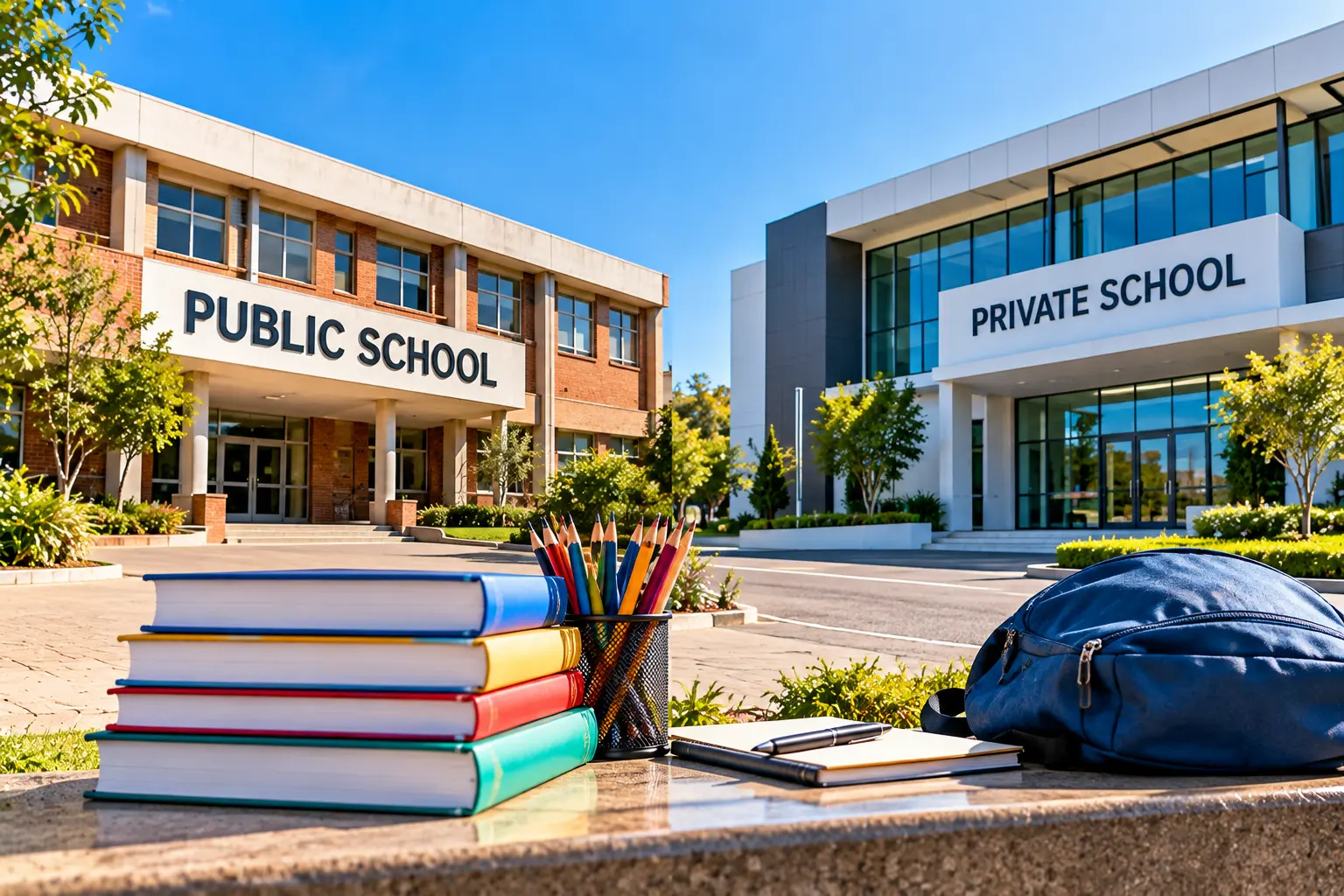
There are no simple answers to the debate about whether private schools in South Africa deliver an education that is better than what is available in public schools.
The quality of schools can vary significantly across the board, with both public and private schools having certain advantages, depending on the circumstances.
A well-run public school can deliver a wonderful education, while a poorly managed private school could leave a child under-achieving
There is no one-size-fits-all recommendation, but rather parents should assess what their child needs and what their options are in terms of available schools.
What is the difference between public and private schools?
Public schools
are part of the national education system and are primarily funded by the government (although they can seek additional funding from other sources). Private schools are independent of the public-education system and usually rely on school fees for funding.
The main differences between public and private schools can impact on fee structures, entry requirements, class sizes and the types of programmes that are on offer.
However, this does not necessarily mean that every private school is automatically better than every public school.
What can public schools offer?
Public schools cater for learners from a broad cross-section of society.
Their main advantage is accessibility: parents do not need to pay high school fees, and it is not unheard of for learners to attend a public school in the area where they live
While there may be additional costs for uniforms, transport and school activities, parents do not need to make a significant financial investment for a public school education.
Public schools also allow learners to mix with a broad variety of other learners, and depending on the school, offer a range of sporting, extra-mural and educational activities.
Potential challenges at public schools
Conditions can vary considerably between schools
Some public schools can be hampered by:
- Large class sizes
- Under-resourced schools
- Inadequate infrastructure
- A lack of specialist facilities
- High expectations placed on teachers
These challenges are not an inherent part of the public-school system, but tend to affect many government-run schools, and not always those in the same area.
There are well-resourced public schools that offer exceptional academic and extra-curricular experiences, but parents should evaluate the individual school rather than judging public schools as a whole.
What can private schools offer?
Private schools can offer a broad range of different school environments, but parents should understand that there is no single profile that applies to all private schools. While some choose a private education for their child specifically because they are looking for a different learning experience, others may not have a choice because their child has not been accepted by a public school, or because there is no suitable public school in their area.
Private schools may also be able to offer more flexibility in terms of the curriculum, depending on the school’s specialisation and the regulations it must follow.
Potential advantages
Depending on the school, private education may offer:
- Smaller classes that allow for more one-on-one teaching
- Modern facilities and equipment
- Extra academic support
- A greater number of extra-mural activities
- Specialised academic content
While these advantages are available at many private schools, parents need to consider whether the benefits outweigh the costs.
The cost of private education
The single biggest consideration for most parents is the affordability of a private education.
Private schools tend to charge not only school fees, but additional costs such as registration, uniforms, transport, meals, sports and other extra-curricular activities
Parents need to look at how much it would actually cost to send their child to a specific school in a year, rather than just comparing school-fees figures.
Are private schools academically better?
Not necessarily. While there is no doubt that good academic results can be achieved at private schools, comparing one school’s academic results to another’s is not as straightforward as it seems.
Learners attending private and public schools come from a broad variety of backgrounds that can impact on their academic achievement. Admission criteria, parental support, learner support within the school and the general academic environment of the school can all play a part.
As a result, a higher pass rate at a private school does not necessarily mean that the school itself is responsible for the results.
A well-managed public school can achieve outstanding results without the high fees that are charged by private schools.
Does a smaller class always mean better education?
While small class sizes allow teachers to give each learner more attention, there are other factors that play a role in the quality of the education a child receives, including:
- The experience and stability of teachers
- School leadership
- The academic standards and support that are in place
- Learner support
- Discipline
- The curriculum on offer
- The school’s approach to assessment
- How well the school communicates with parents
A school with small classes is not automatically better than a school with larger classes if there are other shortcomings.
What about facilities?
It is possible for private schools to have a greater investment in facilities such as laboratories, sporting facilities, computer resources and libraries than public schools.
However, this is not always the case, and facilities are only one part of what makes a good school.
Parents should consider what the school’s facilities are like in practice and whether they can support their child’s interests.
A school with limited facilities can still be a great place to learn if the teaching staff are able to provide a strong academic foundation and support system.
Which option is better for your child?
Instead of thinking about whether public or private schools are better, parents should be asking themselves what kind of education their child needs.
There are many factors to be taken into account, and these can vary for each child:
- Academic abilities and needs
- Learning styles and requirements
- Social needs and preferences
- Extra-mural interests
- Learner support needs
- Travel constraints
- Career aspirations
The answer can be different for each child, even within the same family.
What should parents compare before deciding?
Before making a decision, parents need to compare a number of factors, especially across schools:
1. Academic performance
Look at a school’s academic history beyond one set of results. Ask yourself whether learners get the support they need if they are struggling.
2. Teachers
Ask about the teachers’ qualifications and experience, and how stable the staff is.
3. Class sizes
Find out if the school can provide an appropriate amount of one-on-one teaching.
4. Curriculum
Look at what subjects and extra-curricular activities are on offer, and if they match the child’s needs and future plans.
5. School environment
Visiting the school gives you an idea of discipline, learner conduct, cleanliness, security and the general environment.
6. Extracurricular activities
If sport, music, art or other activities are a priority for the child, the school should have appropriate facilities and staff in place.
7. Learner support
Parents should enquire about how learners with academic, social or other challenges are supported.
8. Total cost
For private schools in particular, parents should calculate the total cost, including fees, transport, uniforms, meals, sports and other expenses.
9. Distance from home
A far commute can take a toll on a learner’s routine, energy and time for studying and extra-curricular activities.
Public or private: which should parents choose?
There is no one-size-fits-all answer to the debate about whether public or private schools are better. A private school could be the better option for one learner because of smaller classes, better facilities or a more challenging curriculum, while another learner may benefit from a well-run public school that offers the right learning environment and support system.
The most important comparison is between schools, rather than between whether public or private education is better.
Parents should look at what schools are available to them and compare the quality of education on offer, as well as the associated costs.
The bottom line
Both public and private schools have the potential to provide a good standard of education, but parents should be aware that the quality can vary considerably from one school to the next.
Private schools may offer a more specialised education that is available in smaller class sizes, but this comes at a much higher cost than what is typically required for a public education.
Public schools provide an accessible education option and an opportunity for learners to interact with a diverse group of other learners, and some public schools are highly regarded for the education they provide.
For families in South Africa, the most appropriate choice depends on a number of factors that should be considered for the individual learner, including quality of education, location and cost.
Rather than focusing on whether public or private education is better, parents should visit the schools that are an option for their child, ask the right questions and weigh up what each school can offer.
Editorial and fact-checking information
Editorial approach: This article portrays public and private schools as two options for parents rather than positioning one school sector as better than the other.
Fact-checking: General comparisons are made between public and private schools, but it is important to note that conditions can vary considerably between the different schools that fall under these categories.
Corrections: School policies, fees, programmes and admission requirements can change, and parents should contact the schools they are interested in to confirm the latest information before making an enrolment decision.
