
Published: 7 June 2026
Author: Phindile Dlomo
Category: Learnerships, Early Childhood Development, Education Careers, Skills Training
New ECD Learnership Creates Opportunities for Aspiring Childcare and Education Professionals
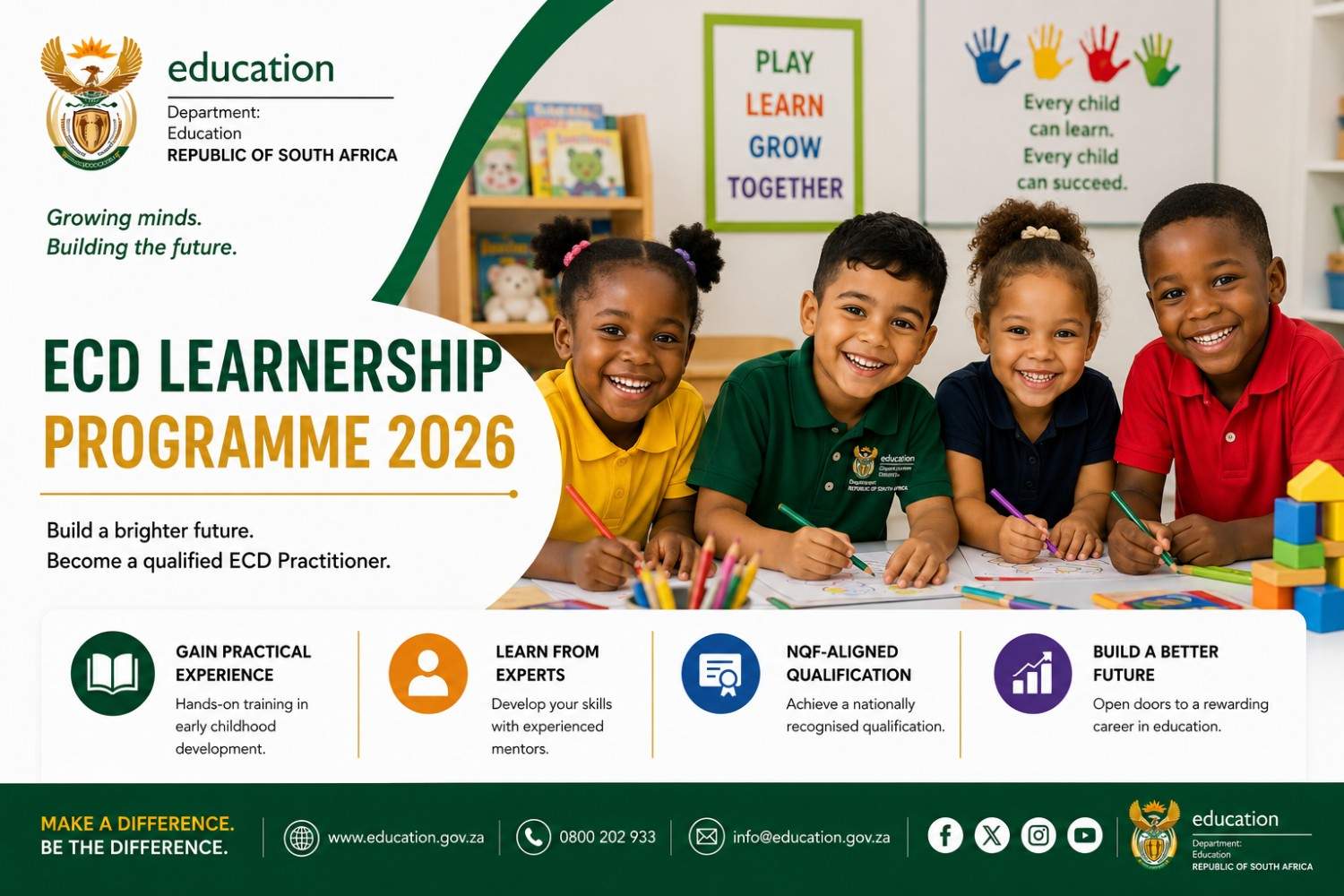
South Africans interested in building a career in education and childcare may benefit from the SETA-accredited Early Childhood Development (ECD) Learnership Programme for 2026.
The programme is designed to provide learners with both theoretical knowledge and practical workplace experience in the field of Early Childhood Development. Through structured learning and hands-on training, participants will gain valuable skills that can support future employment opportunities within the education sector.
The learnership focuses on helping participants understand how children grow, learn, and develop during their early years, while also equipping them with practical teaching and childcare skills.
Programme Overview
| Programme Information | Details |
|---|---|
| Programme | Early Childhood Development (ECD) Learnership |
| Accreditation | SETA-Accredited |
| Duration | 12–24 Months |
| Programme Type | Learnership |
| Training Model | Theory and Practical Workplace Experience |
| Sector | Education and Childcare |
What Is an ECD Learnership?
An Early Childhood Development Learnership is a structured training programme that combines classroom-based learning with practical workplace experience in childcare and early learning environments.
The programme aims to prepare learners for careers supporting the growth, learning, and development of young children during their formative years.
Participants gain practical exposure to educational settings while developing an understanding of child development, classroom management, and learning support techniques.
Key Learning Areas
The programme covers several important areas of Early Childhood Development.
Child Psychology and Development
Participants learn about:
- Child growth and development stages
- Emotional development
- Social development
- Cognitive development
- Behavioural understanding
Understanding how children develop helps practitioners create supportive learning environments that encourage healthy growth.
Early Learning Methodologies
Learners gain knowledge of:
- Early learning approaches
- Child-centred education techniques
- Play-based learning
- Learning through exploration
- Age-appropriate teaching methods
These methodologies help practitioners support children’s educational development effectively.
Health, Nutrition and Safety in Childcare
Participants are introduced to essential childcare practices, including:
- Child health awareness
- Nutrition fundamentals
- Safety procedures
- Hygiene practices
- Child protection principles
These competencies are critical in ensuring the wellbeing of children in learning environments.
Curriculum Design and Lesson Planning
The programme also focuses on educational planning skills.
Learners may develop knowledge in:
- Lesson preparation
- Activity planning
- Curriculum implementation
- Educational resource development
- Learning assessment techniques
These skills help practitioners deliver structured and engaging learning experiences.
Practical Workplace Experience
One of the most valuable components of the programme is workplace exposure.
Participants may gain practical experience in:
- Early learning centres
- Preschools
- Daycare facilities
- Childcare environments
- Community-based learning programmes
Practical experience allows learners to apply theoretical knowledge in real-world educational settings.
Who May Benefit From This Learnership?
The programme may be suitable for:
- School leavers
- Aspiring ECD practitioners
- Childcare assistants
- Community development workers
- Individuals interested in teaching careers
- People passionate about working with children
It may also benefit those looking to gain recognised skills and practical experience before pursuing further studies in education.
Why Early Childhood Development Matters
Research consistently shows that the early years of a child’s life play a crucial role in long-term educational and social development.
Qualified ECD practitioners contribute to:
- School readiness
- Early literacy development
- Cognitive growth
- Social skills development
- Emotional wellbeing
As South Africa continues to prioritise access to quality early childhood education, demand for trained ECD practitioners remains important within the education sector.
Application Process on DBE Recruit Portal
Skills Learners May Develop
During the programme, participants may strengthen both technical and workplace skills.
Technical Skills
- Child development support
- Learning programme implementation
- Lesson planning
- Childcare practices
- Educational activity facilitation
Workplace Skills
- Communication
- Teamwork
- Time management
- Observation and reporting
- Problem-solving
- Professional conduct
These skills are valuable in both educational and community development environments.
Potential Career Opportunities
After completing an ECD learnership, participants may pursue opportunities such as:
- Early Childhood Development Practitioner
- ECD Assistant
- Preschool Assistant
- Childcare Worker
- Daycare Practitioner
- Community Education Worker
- Learning Support Assistant
Some learners may also choose to continue their studies in education-related qualifications.
Benefits of Participating
Participants may benefit from:
- SETA-accredited training
- Practical workplace exposure
- Industry-relevant skills development
- Improved employability
- Professional growth opportunities
- Educational career pathways
The combination of theory and workplace learning helps learners develop confidence and practical competence.
Editorial Analysis
Early Childhood Development remains one of the most important sectors within South Africa’s education system. Quality early learning has a lasting impact on children’s academic success, emotional wellbeing, and future development.
Programmes such as the SETA-accredited ECD Learnership provide aspiring practitioners with valuable training and workplace experience that can support long-term careers in education and childcare. For individuals passionate about helping children learn and thrive, this learnership offers an opportunity to build meaningful skills while contributing to early learning and development.
Sources and References
- Early Childhood Development Training Frameworks
- South African Skills Development Programmes
- ECD Sector Skills Development Initiatives
- Child Development and Early Learning Guidelines
- SETA Training and Learnership Standards
Editorial Transparency
This article is intended for informational purposes only and is based on information supplied regarding the ECD Learnership Programme. Applicants should verify programme requirements, accreditation status, application procedures, and available training locations directly with the training provider before applying.
Information was accurate at the time of publication.
