
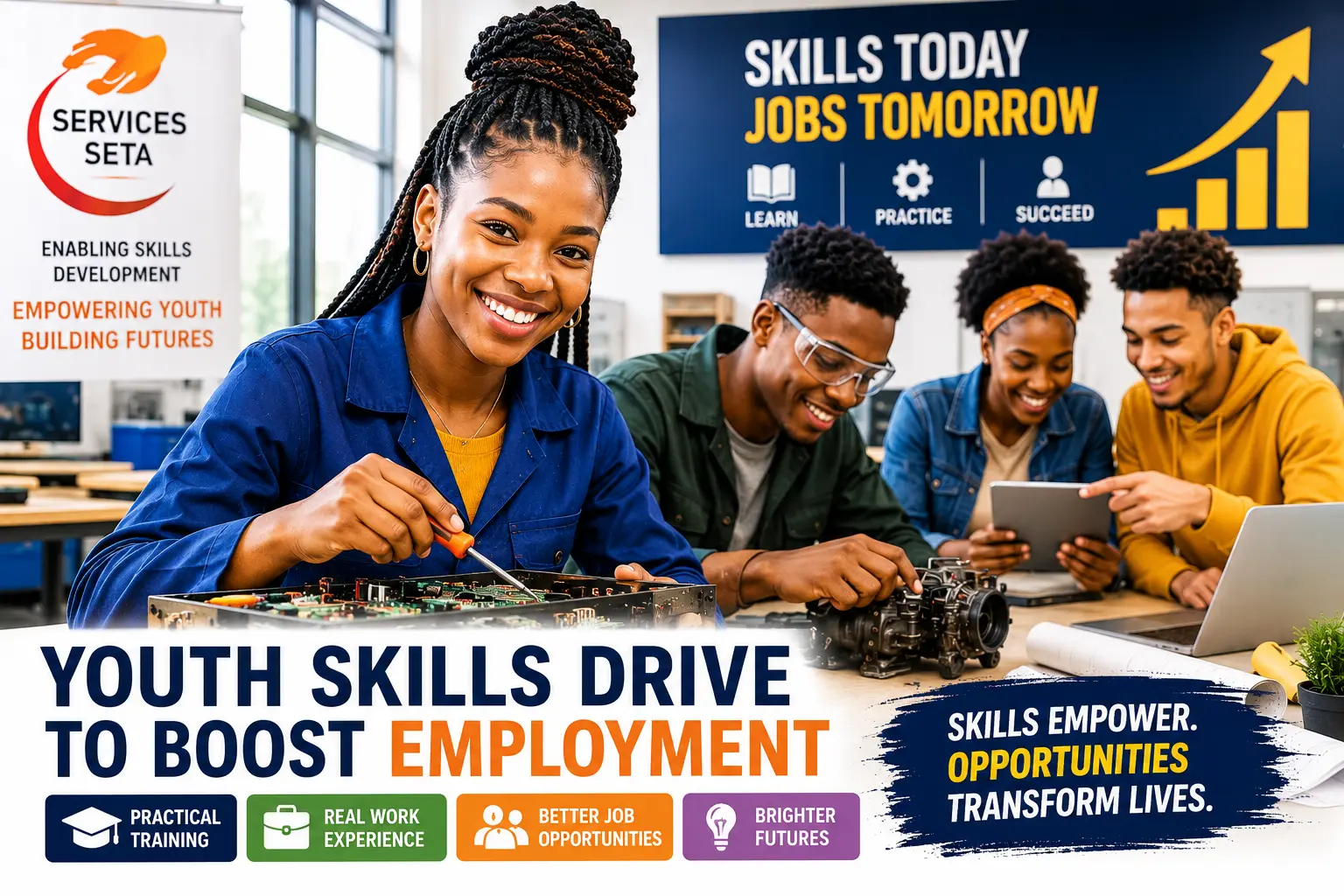
Leaders Say Strong Partnerships Are Key to Creating More Opportunities for South Africa’s Young People
A renewed collaboration between the Services SETA, the City of Johannesburg (COJ), and the Phosaane Institute is reinforcing the importance of partnerships in tackling youth unemployment through skills development, training, and economic inclusion.
The initiative brings together government, education providers, and local communities with a shared objective: equipping young South Africans with practical skills that improve their chances of securing employment, starting businesses, and contributing to economic growth.
Speaking during the programme, Martin Ngwako Lebea, Executive Head of Social Development at the City of Johannesburg, said the partnership demonstrates the positive outcomes that can be achieved when institutions work collectively toward a common vision.
“The partnership between the Services SETA, the City of Johannesburg and the Phosaane Institute demonstrates what can be achieved when government, skills development institutions and communities work together towards a common goal and objective,” Lebea said.
He also encouraged stakeholders to continue expanding initiatives that open new pathways for young people to participate meaningfully in the economy.
Collaboration Driving Real Community Impact
South Africa’s youth unemployment rate remains one of the country’s most pressing socio-economic challenges. While government programmes continue to support education and training, experts increasingly agree that partnerships between public institutions and accredited training providers are essential to delivering long-term results.
The collaboration between the Services SETA, the City of Johannesburg, and the Phosaane Institute reflects this integrated approach by combining funding, training expertise, and community engagement to support youth development.
Rather than focusing solely on classroom learning, the partnership aims to provide participants with practical knowledge and workplace-relevant skills that prepare them for future careers.
Building Skills That Meet Labour Market Needs
Skills development has become a cornerstone of South Africa’s economic recovery strategy. Programmes supported by the Services SETA are designed to address skills shortages while improving employability in sectors that continue to create opportunities.
Municipal partnerships also help ensure that training reaches communities where unemployment remains highest, particularly among first-time job seekers.
By aligning training programmes with labour market demands, organisations can better prepare participants for employment while supporting inclusive economic growth.
Expanding Pathways to Employment and Entrepreneurship
Lebea emphasised that skills development should lead to tangible economic opportunities beyond the completion of training.
Creating access to internships, workplace experience, entrepreneurship support, and further learning opportunities enables young people to build sustainable careers rather than short-term outcomes.
This broader approach helps strengthen local economies while empowering communities through increased participation in productive economic activity.
Why Cross-Sector Partnerships Matter
Successful youth development programmes often share several important characteristics:
- Collaboration between government and accredited training institutions.
- Industry-relevant skills that respond to employer demand.
- Practical workplace exposure.
- Support for entrepreneurship and self-employment.
- Community engagement that ensures programmes address local needs.
- Continuous investment in lifelong learning.
These elements improve participants’ readiness for employment while helping employers access a better-prepared workforce.
Supporting South Africa’s Skills Development Goals
The Services SETA continues to play a central role in funding occupational qualifications, learnerships, internships, and skills programmes that contribute to the objectives of the National Skills Development Plan.
Working closely with municipalities and accredited partners allows these programmes to extend their reach and maximise their impact across communities.
The City of Johannesburg’s continued involvement highlights the important role local government can play in connecting residents with opportunities that promote economic inclusion.
Looking Ahead
As South Africa continues working to reduce unemployment and strengthen workforce participation, collaborative initiatives such as this one provide a practical model for sustainable development.
Leaders believe that expanding partnerships between government, education providers, employers, and communities will be essential to creating more opportunities for young people in the years ahead.
Investment in skills today not only benefits individual participants but also contributes to stronger businesses, resilient communities, and long-term national economic growth.
Sources and References
- Official statement by Martin Ngwako Lebea, Executive Head of Social Development, City of Johannesburg.
- Services SETA information on skills development and workforce training initiatives.
- South Africa’s National Skills Development Plan (NSDP) and Skills Development Act.
Editorial Policy
This article has been independently written using verified information from official programme remarks. Additional context has been included to explain the significance of the partnership and its contribution to South Africa’s skills development objectives. All quotations remain unchanged and are attributed to the original speaker.
Published: 26 June 2026
Category: Skills Development | Youth Employment | Education | Government Partnerships
